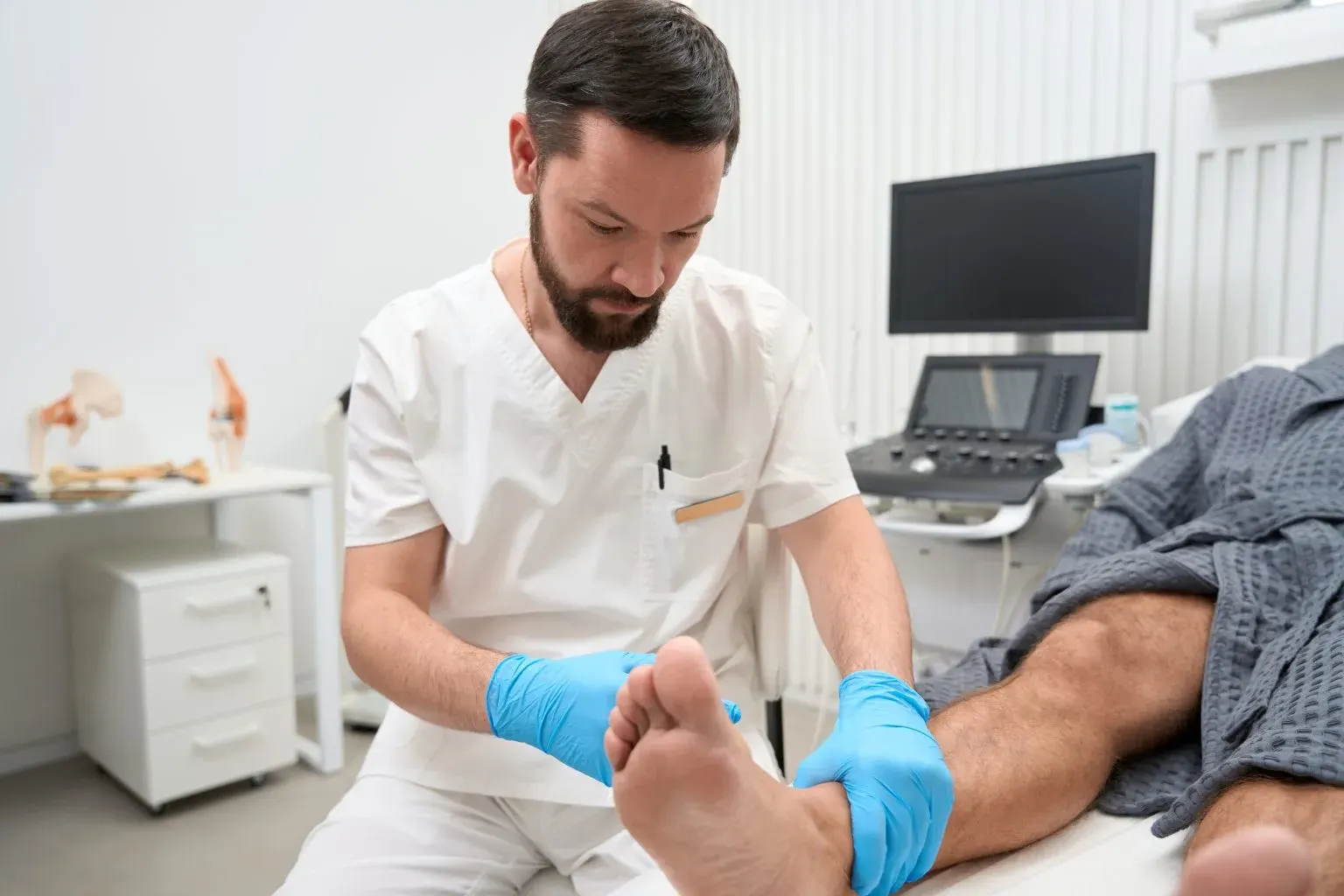


An ankle sprain happens when the ligaments that hold the ankle bones together are stretched or torn. Most sprains occur when the foot rolls inward, injuring the ligaments on the outside of the ankle.
Many people rest a sprained ankle until the pain fades and then go straight back to normal activity. The problem is that the ankle is often still weak, stiff and less stable than before, which makes another sprain more likely. Physical therapy for a sprained ankle helps restore motion, strength and balance so you can return to your activities with more confidence and a lower risk of re-injury.
Doctors usually grade ankle sprains by how much the ligaments are damaged:
There is also a less common "high ankle sprain," which affects the ligaments just above the ankle joint. These injuries often take longer to heal and should be evaluated by a specialist.
Early care helps control pain and swelling and sets the stage for rehab. For the first two to three days, focus on:
Not every twisted ankle needs an X-ray, but some signs suggest a possible broken bone. Get your ankle checked promptly if:
Our offices offer digital X-rays, so your podiatrist can often check for a fracture during the same visit. If a break is found, you will be guided through appropriate fracture care instead of a standard sprain program.
When a ligament is injured, it is not only the ligament that needs to heal. The small sensors in the ankle that tell your brain where your foot is in space (proprioception) are disrupted, the surrounding muscles weaken and the joint may stiffen. If these problems are not addressed, some people develop a pattern of repeated sprains and a feeling that the ankle "gives way."
A structured program of in-office physical therapy works on all of these areas. Your provider tailors the exercises to your sprain, your pain level and your goals, and adjusts them as you improve.
Rehab usually moves through several overlapping phases. The exercises below are common examples used in ankle sprain physical therapy. They are for general education only: start them under your provider's guidance, move slowly and stop if you feel sharp pain.
Once the worst pain and swelling begin to settle, gentle movement helps prevent stiffness.
As motion returns, strengthening helps protect the ligaments while they heal.
Balance training is one of the most important parts of preventing another sprain.
You can see examples in our "Balance & Rehab Exercises" video on the videos page.
The final phase prepares the ankle for the demands of your sport or job. It may include brisk walking, light jogging, figure-eight patterns, gentle hopping and sport-specific drills. Your provider will usually look for full motion, good strength and balance, and little or no swelling before clearing you to return. Athletes can get additional support through our sports medicine services.
Every ankle heals at its own pace, and recovery depends on the grade of the sprain, your age, your activity level and how consistently you follow your rehab plan. As a general guide:
Even after pain is gone, strength and balance may not be fully back, which is why finishing your rehab program matters.
At Southernmost Foot & Ankle Specialists, your ankle can be evaluated, X-rayed and treated under one roof. Our podiatrists assess the injury, rule out fractures and create a rehab plan, and our in-office physical therapy helps you progress safely through each phase of recovery. We see patients at our offices in Key West, Homestead and Coral Gables, Florida, and walk-ins are welcome.
See a podiatrist if:
Call us toll-free at 855-300-6685 or schedule an appointment online to start your recovery with a specialist.
It depends on the severity. With a mild sprain, gentle walking is often allowed as pain permits. If you cannot bear weight or walking is very painful, have your ankle checked to rule out a fracture before putting weight on it.
Ice is generally used during the first few days to help with pain and swelling. Ask your provider before using heat, especially while the ankle is still swollen.
Gentle range-of-motion exercises often begin once the initial pain and swelling start to ease, sometimes within a few days. Your provider will tell you when it is safe to start and when to progress to strengthening and balance work.
A brace can protect the ankle while it heals and during sports afterward. Your provider can recommend whether you need one, which type and for how long.
Repeated sprains often happen when the ankle has not fully regained its strength and balance after a previous injury. A complete rehab program, and in some cases further evaluation, can help break that cycle.
Our philosophy has been that the patient always comes first.
See a foot and ankle specialist at our offices in Key West, Homestead and Coral Gables. For a medical emergency, call 911.